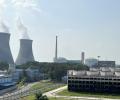
Atomic Energy Commission Chairman Ajit Kumar Mohanty announced that India's private sector is projected to invest Rs 7.5 lakh crore and contribute 30 GW towards the nation's goal of achieving 100 GW nuclear power capacity by 2047. This marks a significant policy shift, facilitated by the SHANTI Act, encouraging private participation in nuclear energy beyond the traditional public sector model. The country is also exploring Small Modular Reactors (SMRs) for industrial needs and advancing its three-stage nuclear power programme, leveraging its substantial thorium reserves.


The United States, which entered this war in expectation of a short, sharp win along the Venezuela model, is now preparing for deeper involvement in a conflict it does not fully control, without the allies it typically relies on, against an adversary that is not behaving as expected, in a global environment that is already absorbing economic shock. Prem Panicker continues his must read daily blog on the Gulf War.

The PMK has now lent its voice to the protests against the mining of atomic minerals in Kanyakumari.

India's nuclear establishment is continuing its march of folly at the expense of safety in the false belief that atomic power is the energy of the future. It's not. Nuclear power is in relentless global decline, says Praful Bidwai.

'Modi and Abe are working seriously for India-Japan bonhomie to grow stronger.' 'It is a win-win situation for both countries and the future look promising,' says Rajaram Panda, the Indian Council for Cultural Relations India Chair Visiting Professor at Reitaku University, Japan.

This is the joint statement issued by the ministry of external affairs on the visit of US President Barack Obama to India.
